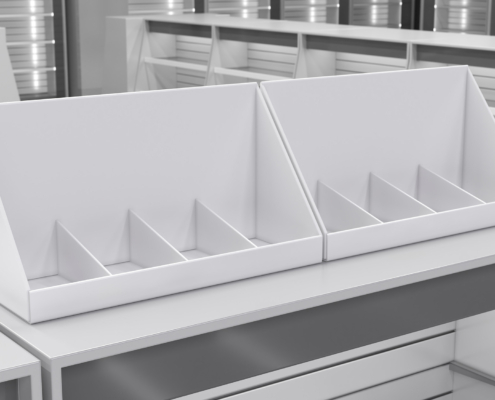
High-volume seasons are not simply a test of how much product a brand can produce. They are a test of how efficiently that product can move from the production floor to the retail shelf and be merchandised without delay. Retail buyers plan shelf allocations months in advance, and the brands that earn prominent placement are the ones that can deliver consistent, display-ready execution at the volume those accounts actually need.
During peak seasons, the speed and quality of retail fulfillment determines how visible your brand is on the floor. The shelf rewards a specific set of capabilities:
- Low-Labor Merchandising: Products that move from the receiving dock to the retail display without any unpacking or rearranging at the store level get to the floor faster and stay there more reliably throughout the selling window.
- Consistent Presentation at Every Location: Retail buyers notice when a product looks different from store to store. Brands that arrive with uniform, display-ready configurations build buyer confidence and earn repeat placement across the full retail footprint.
- Reduced Burden on Store Staff: During peak seasons, store labor is stretched thin. Products that require less time to stock and face are favored by retail buyers because they reduce the risk of gaps on the floor during the highest-velocity selling periods.
- Reliable and Clean Replenishment: High-velocity food categories demand fast restocking cycles. Brands that can replenish quickly and without extra handling from the stocking crew hold their floor position better than those that cannot.
The brands that struggle most during high-volume windows are typically not the ones with weak products. They are the ones whose packaging creates friction at the retail level: slower to stock, harder to merchandise, and more likely to look inconsistent across locations. Solving that problem before the season starts is what separates brands that grow their retail position from ones that hold steady or lose ground.